Written by Spring 2025 AFA Intern Franny Daleo-Clark
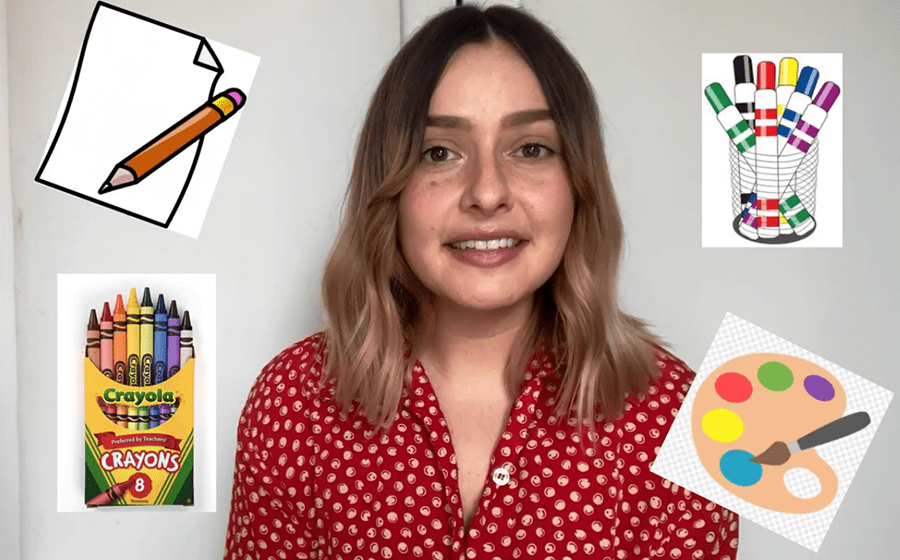
As a new intern with Arts For All, I have been watching some of the educational video series from Arts For All’s Virtual Classroom. This past week, I engaged with Ciara Ruddock’s ARP: Social Emotional Learning series. I participated like a student while taking notes and thinking critically about the way the series implements and supports social emotional learning. Social emotional learning (SEL) is the process in human development in which “young people and adults acquire and apply the knowledge, skills, and attitudes to develop healthy identities, manage emotions and achieve personal and collective goals, feel and show empathy for others, establish and maintain supportive relationships, and make responsible and caring decisions” (CASEL). There are five main components: self-awareness and self-management, social awareness and relationship skills, and responsible decision making. Ciara Ruddock, a teaching artist with Arts for All, uses this virtual education platform to teach the viewer/student to explore feelings and emotions and how to incorporate them into artwork.
There are five parts to the series. In Part One, Ruddock begins by explaining the goals for the lesson: to learn how to use an emotion we are currently feeling or one from a past experience and incorporate it into our artwork. First, she prompted self-awareness by leading a body scan, in which participants (like me) become attuned to our feelings by noticing what we feel in our bodies, one isolated body part at a time. I have done lots of body scans before and enjoy it as a grounding, meditative process. We transitioned into artmaking by making a feelings color wheel and labeling what feelings each color brought up for us. Then, we practiced mark making and created lines and shapes for each feeling. To put it all together, we used the marks we came up with, as well as the colors that matched our feelings, to create an abstract art piece that maps out how we are feeling. I used my feelings in the present moment, but we also had the opportunity to use a past emotional experience. These activities led me (and any other students watching) in practicing self-awareness, self-management and decision making.
The second part of the series is a collage-making session. Ruddock begins this lesson with a short meditation that encourages self-awareness and management again. After a pause to gather materials (through which she encourages decision making and allows us to use any materials that we would like), we have some time to outline our collage. The next part of the creation process is collaborative, having us pass the collage to switch with a partner. This fosters social awareness and relationship skills! I did not have a partner to work with when I made my collage, but I used the time as an opportunity to think about how letting go of some of the control over my art would make me or a young person feel and wonder about ways to wrestle with those feelings.
The third part of the series is themed around sculpting, but Ruddock begins as usual with a mindful meditation. After that, we practice ways to transform paper: folding, adding volume and dimension, making shapes, crumpling it and adding texture, or tearing it. Then, we make a sculpture with a second sheet of paper and document it by sketching at each step/major transition in the process. Ruddocks lets us know ahead of time that we will tear the sculpture in half, being mindful of the emotions it brings up. This gives us a new place to work from and encourages the student to keep going, take risks, and have fun! I definitely had fun using my hands to explore paper tactically, taking risks and removing judgment from the artmaking process.
We keep the sketches from our sculpture process for part four of the series, in which students get to make a comic or story out of them. Ruddock has us pick a title for the work first, which encourages decision making and awareness. For some young people, this is very challenging, so she adds that you could instead think of where the sculpture might be from if you had to choose a place. Then she asks lots of thought-provoking questions that foster emotional self-awareness. Next, we made comics based on the series of sketches. Ruddock encourages us to share at the end, with anyone (even a pet!), and practice telling someone about the process, art product, and emotional feelings along the way. This is a lovely activity that helps students build social awareness and relationship skills!
The final part of the series further builds these skills by focusing on community building and mural making. At this point, I was familiar with the routine of beginning with a mindful relaxation exercise and grateful for the pause. Ruddock shares that this artmaking activity is best done collaboratively, so although I was working alone, I reached out over the phone to brainstorm some ideas and practice my social skills. Even adults can practice social emotional learning! Throughout the video, we are encouraged to consider our community and our role within it (social awareness!) and to observe our emotions without judgement. The final mural is meant to be a collaborative collection of papers, especially on a large scale, that helps kids (and adults like me) bring the skills we have developed over the series to a community level. Overall, engaging with this series has been a positive learning experience for me!